
Knightdale, NC – October 07, 2026 – PRESSADVANTAGE –
Johnson Auto Body has published new consumer guidance focused on a specific line-item distinction in collision repair documentation: why technicians may remove interior trim to complete an exterior repair even when the trim itself was not damaged in the accident.
The October guidance is designed to help consumers interpret removal-and-installation labor that can appear alongside repairs to doors, quarter panels, and other exterior body areas. It expands on the company’s collision repair information by separating access-related disassembly from work performed directly on a damaged component.
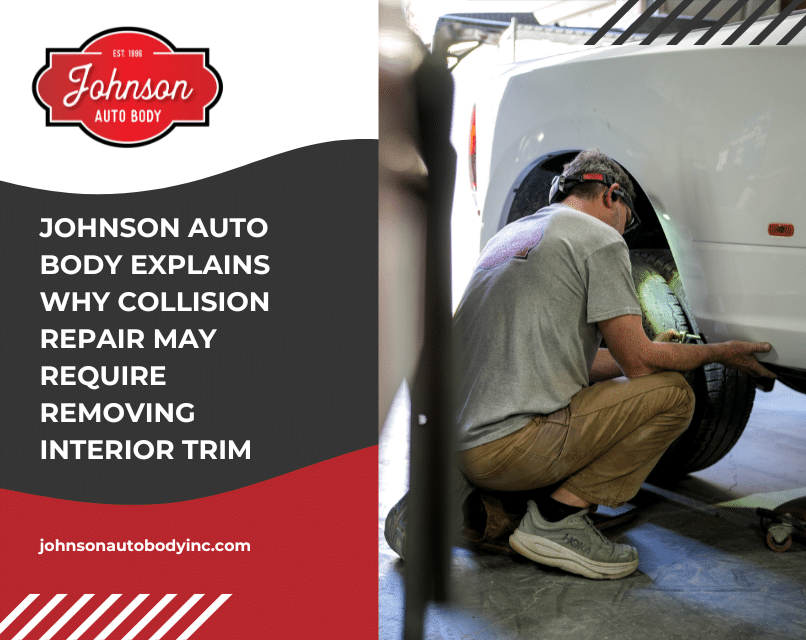
Interior door panels, trunk liners, cargo-area trim, carpeting, and moldings can cover portions of the vehicle needed during collision repair. Depending on vehicle construction and the affected area, these components may conceal fasteners, wiring, attachment points, or the inner surfaces of exterior panels.
The guidance explains that technicians determine necessary disassembly by identifying the damaged area, the components surrounding it, and the repair procedure applicable to the vehicle. Manufacturer repair information may specify access, removal, or related operations for a particular component or repair method. Requirements can therefore differ among vehicles even when exterior damage appears similar.
Johnson Auto Body’s auto body repair information provides additional context about the panel repair and replacement work that these access operations can support.
The October resource uses door and rear-body repairs to illustrate the distinction. During a door repair, interior trim can cover window mechanisms, wiring, fasteners, and attachment areas associated with the exterior component. Rear-body repairs can similarly involve cargo trim or trunk liners positioned between the passenger or cargo compartment and the inner side of the damaged body area.
In either situation, a removal-and-installation operation can provide access to the underlying repair without indicating that the interior component requires separate repair or replacement.
The guidance also explains how disassembly fits into damage assessment. An initial inspection can document visible and accessible collision damage while the vehicle is assembled. When the developed repair process calls for components to be removed, technicians may gain access to areas that could not previously be fully evaluated. Accident-related conditions identified at that stage can then be documented as part of the repair plan.
This distinction provides context for why repair documentation can change after disassembly. The additional operations are based on conditions identified as access to the affected area increases, rather than solely on what was visible during the first exterior inspection.
Interior components can also be positioned near repair work even when they are not directly involved in the collision. Depending on the procedure, applicable trim, wiring, carpeting, or other materials may need to be moved before work proceeds and returned during reassembly.
The October guidance gives consumers a three-term framework for reading these entries. Removal and installation describes temporarily taking a component off and returning it after the associated work. Repair describes work performed on a damaged component when restoration is appropriate. Replacement describes installing another component as part of the developed repair plan.
The framework is intended to address a narrow but important documentation issue. A repair plan reflects more than a list of visibly damaged parts. It can also include the supporting labor required to access those parts and complete the specified repair.
Vehicle-specific information remains central to determining which operations apply. Technicians can identify the vehicle and affected component, review the relevant repair information, and incorporate required access or disassembly steps into the repair plan. The October guidance does not present interior trim removal as a universal requirement for a particular type of collision.
After the underlying work is completed, reusable trim and related components can be reinstalled as the repaired area is reassembled. The resulting documentation therefore distinguishes between a component that was temporarily handled during the repair and one that required corrective work because of collision damage.
The new October publication adds this repair-documentation explanation to the consumer information available through Johnson Auto Body. Additional information about the company and its facility is available through the Knightdale location resource.
By focusing on the difference between access labor and damage-related labor, the guidance provides consumers with a more precise way to read collision repair documentation and understand why an exterior repair can involve temporary work inside the vehicle.
Johnson Auto Body is a locally owned collision repair business founded in 1996. The company provides collision repair and auto body repair services for Knightdale, Raleigh, Wendell, and surrounding Wake County communities. Its facility is located at 821 H & R Drive, Knightdale, NC 27545.
###
For more information about Johnson Auto Body Inc, contact the company here:
Johnson Auto Body Inc
Todd McGee
(919) 217-2887
todd@johnsonautobodyinc.com
821 H and R Dr, Knightdale, NC 27545


