
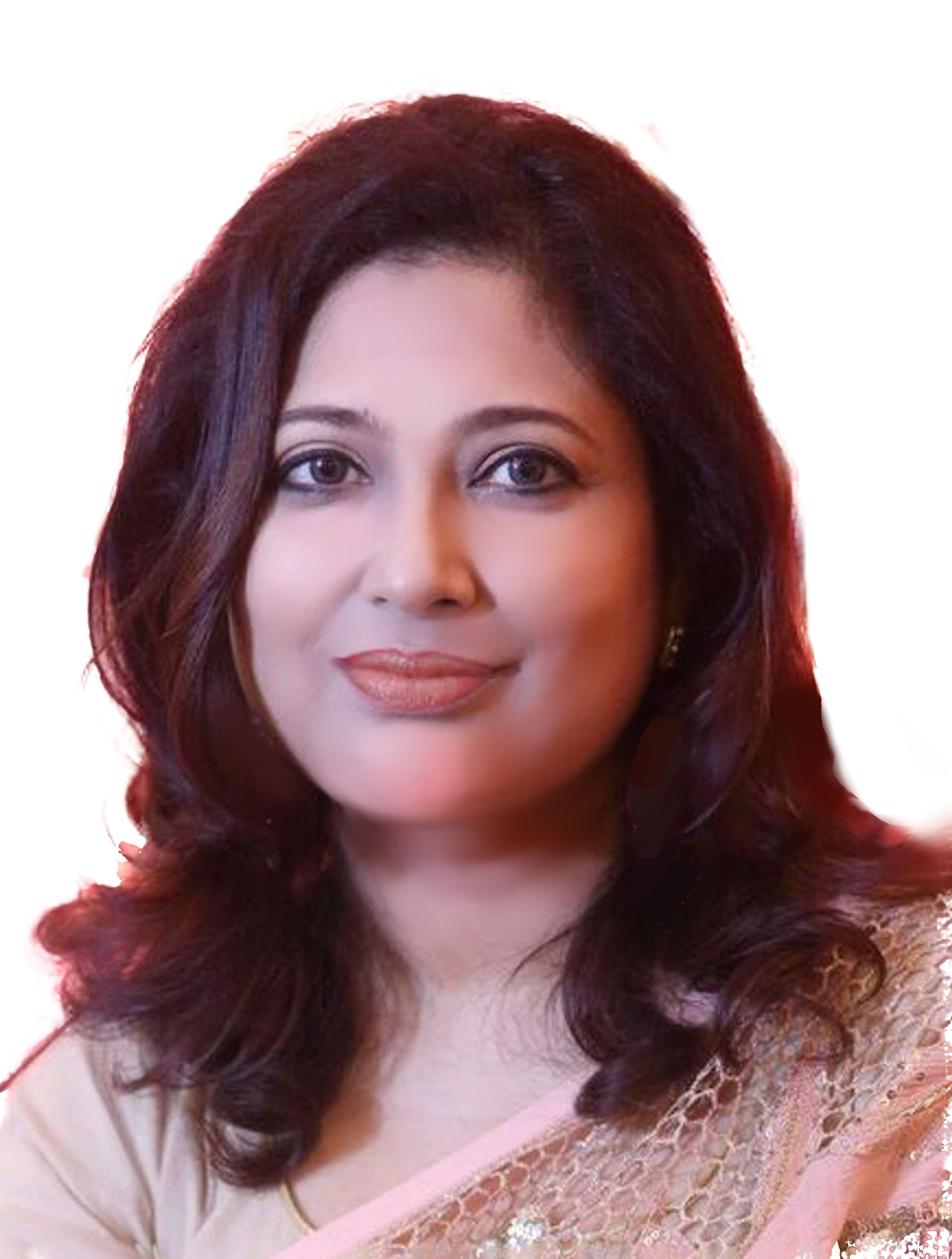
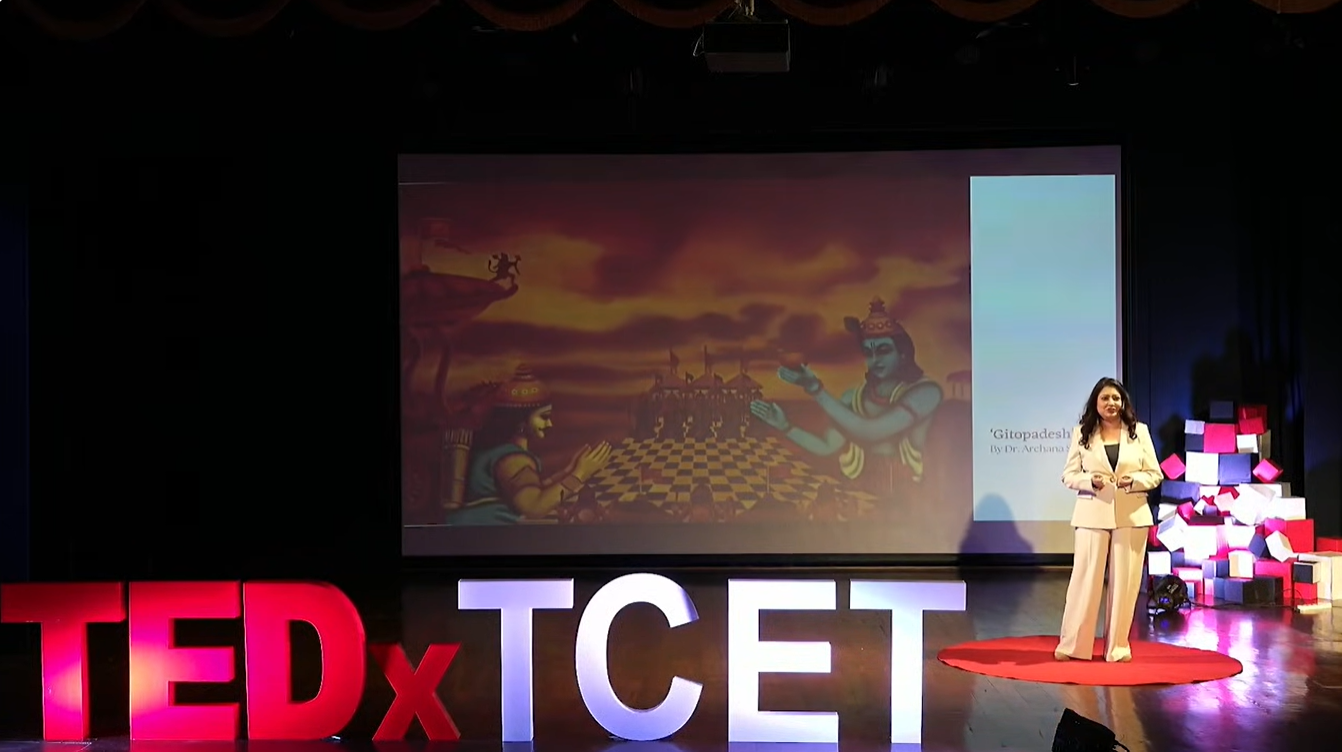
Mumbai, Maharashtra Jul 1, 2026 In a world where history is often reduced to dates and textbooks, Dr. Archana Srivastava makes a compelling case for a different way of knowing the past.
Watch her full TEDx Talk here:
https://youtu.be/JZcTkmFmHP4?si=X8dPwIng5OgRQX9U
It is painted on canvases, sung in poetry, and carved in stones.” What follows is a talk that is equal parts intellectual and deeply personal, and one that has resonated with audiences well beyond the auditorium.
Who She Is
Dr. Archana holds a PhD in history and has spent over 25 years at the crossroads of art, academia, and cultural practice. She is an artist whose figurative works draw from Indian history and spirituality, a gallerist who founded both ArtSage and Les Tresors Art Gallery, and a speaker who brings the rigor of a historian together with the sensitivity of a practicing artist. Her canvases have traveled from Jehangir Art Gallery in Mumbai to Barcelona and New York, carrying the wisdom of the Bhagavad Gita and Vedic traditions to global audiences.
What Drives Her
Dr. Archana founded Les Tresors Art Gallery and ArtSage with a deeply personal dream: to give contemporary artists a strong platform while building a bridge between India’s traditional art forms and the voices shaping our future. She knows first hand what it takes to put your work out into the world, and that experience informs everything she creates and curates. Since its debut in October 2024, Les Tresors has featured over 47 artists ranging from legends like M.F. Husain, S.H. Raza, Rabin Mandal, and Suhas Roy to emerging voices, creating a space where history is not archived but experienced.
How Art and Literature Help Shape, Construct, and Feel HistoryThe Central Argument
In her TEDx talk, Dr. Archana unpacks three powerful ideas: how art and literature shape history, how they help construct it, and perhaps most movingly, how they make us feel it. She makes the case that art and literature are not decorative extras sitting alongside history. They are primary sources. They carry the experiences, ideas, and emotions of an era in ways that no official record ever can.
How Art and Literature Shape History
Dr. Archana reminds us that most of the great movements in human civilization did not begin in parliaments. They began in poetry, on canvases, and in the written word. The Renaissance was not a political revolution. It started with Michelangelo’s paintings and Petrarch’s writing, both reimagining what it meant to be human. The French Revolution was preceded by Voltaire’s satire and Rousseau’s radical ideas. India’s independence movement was fueled not just by political rallies but by Bankim Chandra’s Vande Mataram and Tagore’s letter renouncing his knighthood after the Jallianwala Bagh massacre. Creative expression, she argues, changes consciousness first. And when consciousness changes, history follows.
How Art and Literature Construct History
She also brings a perspective rarely heard in mainstream discussions: that religious literature, folk art, and traditional visual forms carry vital historical evidence that secular scholarship has long overlooked. A single verse from Sufi poetry, she points out, can reveal more about a civilization’s economic practices than an entire government record. The sculptures at the Sundarakamakshi temple in Tamil Nadu contain insights into embryology that predate modern science by centuries. Art and literature, in this sense, are not just reflections of history. They are its construction materials.
How Art and Literature Make Us Feel History
But it is the emotional dimension of her talk that lingers longest. Standing in front of Picasso’s Guernica, she says, you do not just read about the pain of war. You feel it. Tagore’s novel Ghare-Baire does not describe colonial oppression. It lets you inhabit it. Tayeb Mehtas Falling Figures carry the grief of Indias Partition in a way that no textbook passage ever could. Art and literature, in her words, are time machines. They carry us back not just to what happened, but to how it felt to be alive in that moment.
Her signature topics
- From Canvas to Consciousness: How the act of making art opens new ways of seeing the world
- How to Look at Art Beyond the Surface: Reading paintings and sculptures as historical documents
- Art as Cultural Memory: Why civilizations encode their deepest truths in creative forms
- Art as a Way of Deciphering the History of a Particular Era: Using art and literature as primary historical sources
- Art as a Beacon of Change: How creative expression has always preceded social and political transformation
Recognition and Awards
Dr. Archana’s contributions to art and culture have been recognized across India and internationally:
- Make in India Award (2018)
- Woman of Excellence Award (2020)
- Collector’s Vision International Art Award (2021)
- Power of Creativity Art Prize (2021)
- LUXlife Global Excellence Award (2022)
- The Collectors Art Prize (2023)
- Leonardo da Vinci Prize (2023)
- Premier Artist Prize (2024)
Contact and Booking
Website: https://www.archanasrivastava.com
Email: archana.m.srivastava@gmail.com
LinkedIn: https://www.linkedin.com/in/archana-srivastava-07760322
Instagram: https://www.instagram.com/archanasrivastava_artist
Source :Dr. Archana Srivastava


